Home Page
HOME PAGE CLINICAL SERVICES RESEARCH STUDIES RESIDENCY PROGRAM
  
THE UNIVERSITY OF CONNECTICUT HEALTH CENTER HUNTINGTON'S DISEASE PROGRAM

OVERVIEW:

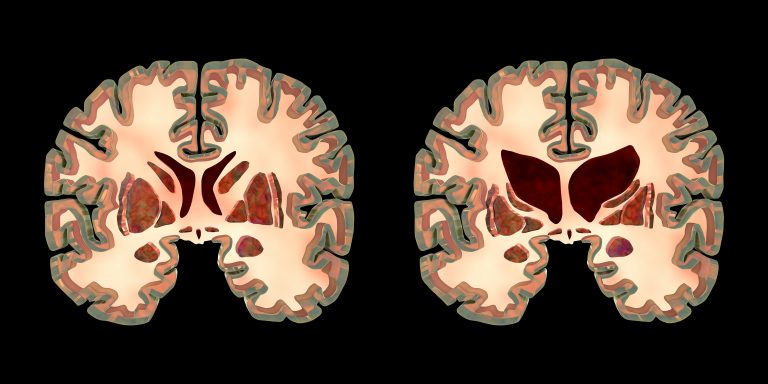
Huntington's Disease (HD) is an inherited progressive brain disorder whose symptoms are caused by the loss of cells in a part of the brain called the basal ganglia. The damage to these cells affects a person's emotional control, cognitive ability (thinking, judgment, memory) and movement. Symptoms of HD vary greatly from person to person and usually appear between the ages of 30 and 50. However, the disease can strike young children (called Juvenile HD) and the elderly. HD can affect males and females of all races all over the world. Common features of HD can be broken down into three categories: Emotional/Behavioral Symptoms, Cognitive/Intellectual Symptoms and Motor Symptoms. Currently there is no cure for HD and eventually it is fatal. Symptoms of the disease however can be treated with medication and behavioral therapy. In 1993 the gene that causes HD was found. Since then, scientists are actively searching for treatments to slow down and/or cure HD.

MISSION:

The mission of the Huntington's Disease (HD) Program of the University of Connecticut Health Center is to provide care, treatment and education to patients with HD and their families. Persons eligible include Connecticut residents who have or are at risk for HD and their family members.

The HD Program is also charged with being an educational resource to health services throughout the state of Connecticut.

EVALUATION AND TREATMENT PLAN:

Evaluations are provided free of charge (excluding laboratory tests and/or radiological studies) and consists of a visit with our neuropsychiatrist, psychiatric nurse, clinical social worker and neuropsychologist. In addition, a visit with our genetic counselor can be arranged for those individuals interested in pre-symptomatic testing.

When assessments are completed, a multidisciplinary treatment plan is created. The treatment plan may make recommendations for further treatment regarding personal/family counseling, medical treatments, home-based and/or long term care issues.

Typically, those patients who are gene positive are seen on a routine basis for follow up. Medical care unrelated to HD is not provided by the clinic.

SERVICES:

  • Neuropsychiatric assessment
  • Psychological evaluation and Neuropsychological assessment
  • Psychosocial assessment
  • Psychotherapy (group or individual)
  • Genetic counseling
  • Education of clients and families

Additional Services (free of charge):

  • Routine follow up care
  • Psychiatric care
  • Education of caregivers in effective behavioral interventions
  • Assistance with entitlements and disability determination
  • Liaison with home care agencies
  • Education of extended care facility staff

RESEARCH STUDIES:

Click on link below for more information.

Physicians at the University of Connecticut Health Center announce plans to participate in a multi-center, observational research study in individuals who are part of a Huntington’s disease (HD) family. The following individuals will be eligible to participate in this study: 1) those who have HD or tested positive for the HD gene; 2) parents, children, and siblings of individuals who have HD or tested positive for the gene; 3) grandparents and grandchildren of those participating in COHORT who have HD or tested positive for the gene; 4) spouses and gene negative family members of those participating in COHORT who have HD or tested positive for the gene.

This is an ambitious project aimed at integrating prospective collection of research and family history data, along with the creation of a biological specimen repository. The purpose of this study is to uncover information about the natural history and scientific knowledge of HD to further our knowledge of the disease and aid in the development of potential treatments for HD, and to plan future research studies of experimental drugs aimed at slowing or postponing the onset and progression of HD.

The study, entitled “Cooperative Huntington’s Observational Research Trial (COHORT),” is being organized and conducted by the HSG, a non-profit, cooperative group of HD experts from medical centers in North America, Europe and Australia who are dedicated to improving treatment for persons affected by Huntington’s disease. Ira Shoulson, MD, Louis Lasagna Professor of Experimental Therapeutics at the University of Rochester is the Principal Investigator for the COHORT study. Additional expertise is provided from co-Principal Investigators, Tatiana Foroud, PhD who is the Director for the Division of Hereditary Genomics and an Associate Professor in the Department of Medical and Molecular Genetics at Indiana University Medical Center and James Gusella, PhD who is the Bullard Professor of Neurogenetics at Harvard Medical School, Director of the Center for Human Genetic Research and the Huntington’s Disease Center Without Walls at Massachusetts General Hospital. Dr. Foroud and Dr. Gusella both have extensive experience and expertise in the genetics of neurodegenerative disorders. Initially there will be 45 HSG clinical sites that will participate in this study across North America and Australia.

“COHORT for the Huntington’s disease community is like the well-known Framingham study, which allowed for the discovery and understanding of many important risk factors affecting health and disease” says Ira Shoulson, Professor of Neurology at the University of Rochester. “But unlike the Framingham study, which defined its population by the geographic location of Framingham, Massachusetts, COHORT is defined by the Huntington’s disease gene, focusing on individuals within Huntington’s disease families who may or may not have inherited the gene. COHORT will eventually provide researchers with new knowledge about the important relationships between genetic and clinical information, as well as the biological material to explore scientific leads and new approaches to treatment.”

Huntington’s disease is an inherited disorder that affects about 30,000 people in the United States. In addition about another 150,000 people are at risk for developing the disease. Huntington’s disease is caused by a defective gene, which leads to the destruction of brain cells, causing involuntary movements, cognitive problems, and typically psychological problems like depression and paranoia. The disease usually strikes in young to mid-adulthood, individuals are usually in their 30s or 40s. The disease is fatal, and while there are some medications to help alleviate some of the disease symptoms, there is no known cure or medication to help slow the progression.

For more information, contact Kaloyan Tanev, MD, site investigator or Mary Jane Fitzpatrick, APRN, study coordinator at the Huntington’s Disease Program at the University of Connecticut Health Center at 860 679-4441 or contact the Huntington Study Group at 800-487-7671 or www.Huntington-Study-Group.org or visit the Huntington Project web site at www.huntingtonproject.org. The HSG and the Huntington Project are supported by, Huntington’s Disease Society of America, the Hereditary Disease Foundation, the Huntington Society of Canada, and the High Q Foundation.

STAFF:
Click on each staff member's name for more information.

Kaloyan S. Tanev, M.D.
Neuropsychiatrist, Medical Director

Bonnie Hennig, M.S.W, L.C.S.W.
Clinical Social Worker

MaryJane Fitzpatrick, A.P.R.N.
Nurse Clinician

Andrea Gainey, M.S., C.G.C.
Certified Genetic Counselor

Anna Bracamonte
Administrative Assistant, Community Liaison

APPOINTMENTS:

The University of Connecticut Health Center
Huntington's Disease Program
263 Farmington Avenue
Dowling North-Second Floor
Farmington, CT 06030-6204

(860) 679-4441
9:00 am - 5:00 pm
Monday - Friday

FEES:

Consultation and assessments are free of charge to Connecticut residents.

DIRECTIONS:

From Bradley International Airport
Follow Route 20 to I-91 South to I-84 West in Hartford. Take I-84 West about 7 miles to Exit 39, which is after 39A.

From Farmington Center
Stay on Route 4 East, Farmington Avenue. As you drive up the hill, toward I-84, stay in right lane and follow the road as it loops to the right and crosses access road to I-84. Continue on Farmington Avenue about 1/2 mile. Take right at fourth traffic light into the Health Center campus. Continue straight and take a right turn at the stop sign. At the next stop sign, bear right. Dowling North is on the left. Free parking is available.

From West Hartford Center
Stay on Farmington Avenue/Route 4 West. The Health Center is about 3.3 miles on the left. Take a left at the stop light into the Health Center campus. Turn right at the first traffic light onto Route 4 East (Farmington Avenue). At third traffic light, turn right to enter the Health Center campus. Continue straight to the stop sign and take a right turn. Bear to the at the next stop sign. The Dowling North building is on the left. Free parking is available.

From Route 44 Canton/Avon
Proceed on Route 44 eastbound through Avon. Turn right onto Route 10 South/Waterville Road. Turn left onto Talcott Notch Road and continue to Farmington Avenue/Route 4 West. Turn right onto Farmington Avenue/Route 4 West. The Health Center is a 1/4 mile on the left. Take a left into the Health Center campus. Continue straight and take a right turn at the stop sign. At the next stop sign, bear right. Dowling North is on the left. Free parking is available.

From I-84
Take Exit 39 (if coming from I-84 West, Exit 39 is after 39A). Turn right at first traffic light onto Route 4 East (Farmington Avenue). At third traffic light, turn right to enter the Health Center campus. Continue straight and take a right turn at the stop sign. At the next stop sign, bear right. Dowling North is on the left. Free parking is available.

From Northbound Route 9
Take Exit 32 (left exit) onto I-84 West and stay in the right lane. Take Exit 39 (first exit). Turn right at first traffic light onto Route 4 East (Farmington Avenue). At third traffic light, turn right to enter the Health Center campus. Continue straight and take a right turn at the stop sign. At the next stop sign, bear right. Dowling North is on the left. Free parking is available.

To Return to Route 9
From the Farmington Avenue entrance on the Lower Campus, take a left onto Route 4 West/Farmington Avenue. At the second light, take a left onto South Road. At the first stop sign, turn right and follow the signs to Route 9 South (you will enter I-84 East briefly prior to exiting onto Route 9 South).

To Return to I-84 East or West
From the Farmington Avenue entrance on the Lower Campus, take a left onto Route 4 West/Farmington Avenue. At the third light, take a left towards the highway entrance ramps and follow the signs staying right for I-84 West or staying left for I-84 East.

LINKS:

Huntington Study Group

UConn       The Web       People
SITE MAP         UCONN HOME         UCHC HOME        TEXT-ONLY © University of Connecticut
Disclaimers, Privacy, & Copyright
Comments      Maps & Directions